Cash flow
Invoice sent is not cash received
A clearer way to read revenue, payments and outstanding balances without mixing different financial events.
By FollowIncome · · 6 min read · Reviewed by FollowIncome editorial team
Sending an invoice can feel like revenue arrived. Operationally, it created a receivable. Until a matching payment is confirmed and recorded, the cash position has not changed in the same way.
Use separate views for what was billed, what was paid and what remains outstanding. Each answers a different question, and each should trace back to its own source record.
Three events, three questions
An estimate proposes scope and price. An invoice requests payment for an agreed obligation. A payment records that money was received against that obligation. Treating them as one event hides timing and collection risk.
Ask “what did we bill?”, “what cash did we record?” and “what is still outstanding?” separately before combining any figures into a broader business interpretation.
Why the difference matters
A strong month of invoicing can coexist with weak cash flow when customers have long terms, invoices are disputed or payments are late. The reverse can also happen when a quiet billing month includes cash collected from earlier work.
This timing gap affects hiring, contractor commitments, tax reserves and the founder’s ability to fund the next project. It is an operational constraint even when the underlying work is profitable.
Build a clean receivables review
For each open invoice, verify the issue date, due date, customer, total, recorded payments and remaining balance. Keep credits, refunds, partial payments and cancelled documents visible.
Prioritize the oldest and largest balances, but read the customer context before following up. A missing purchase order and an ignored invoice may need very different actions.
- Invoices due in the next seven days
- Invoices currently overdue
- Partial payments with a balance remaining
- Payments that still need provider or bank confirmation
Use a human-reviewed follow-up rhythm
Create dated follow-up tasks and keep each message proportional to the contract, customer history and applicable rules. Automation can surface the record or prepare a draft, but a person should review external communication and escalation.
Do not describe an entered payment as bank-reconciled unless the relevant provider or bank evidence supports that claim.
Read profit and cash together—not as one number
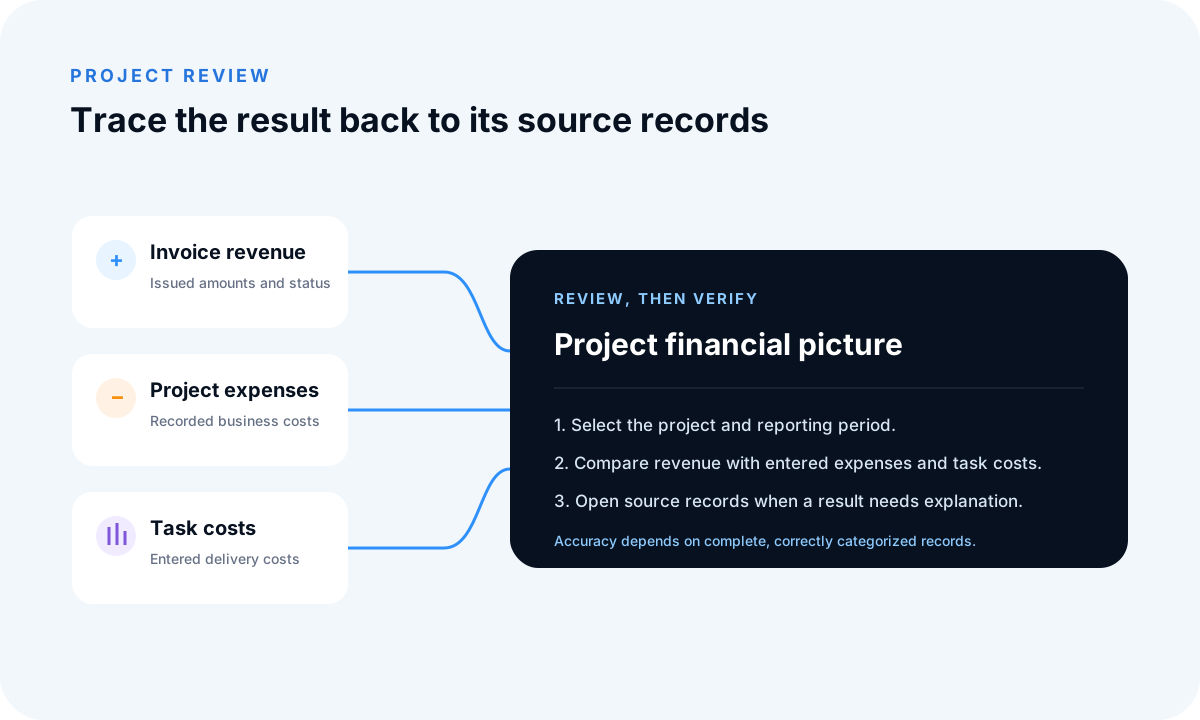
Project profitability can use a defined revenue basis and delivery costs, while a cash review focuses on actual receipts and payments. Both can be useful when their scope is explicit.
FollowIncome supports operational recordkeeping and review. Formal revenue recognition, tax treatment and statutory reporting may require qualified accounting advice.
Keep this checklist
- Invoice totals and payment totals are not mixed
- Open balances reflect partial payments and credits
- Material payments were checked against external evidence
- Follow-up tasks have dates and owners
- The reporting basis is written beside the result
Why FollowIncome publishes this
FollowIncome publishes practical operating guidance for solo founders and small teams. This article is grounded in traceable records, explicit assumptions and the documented product workflows linked below.
This article provides general operational information, not accounting, tax, legal or financial advice.