Client operations
A client onboarding checklist that prevents expensive confusion
Turn a new agreement into a delivery-ready customer, project and billing workflow before work begins.
By FollowIncome · · 7 min read · Reviewed by FollowIncome editorial team
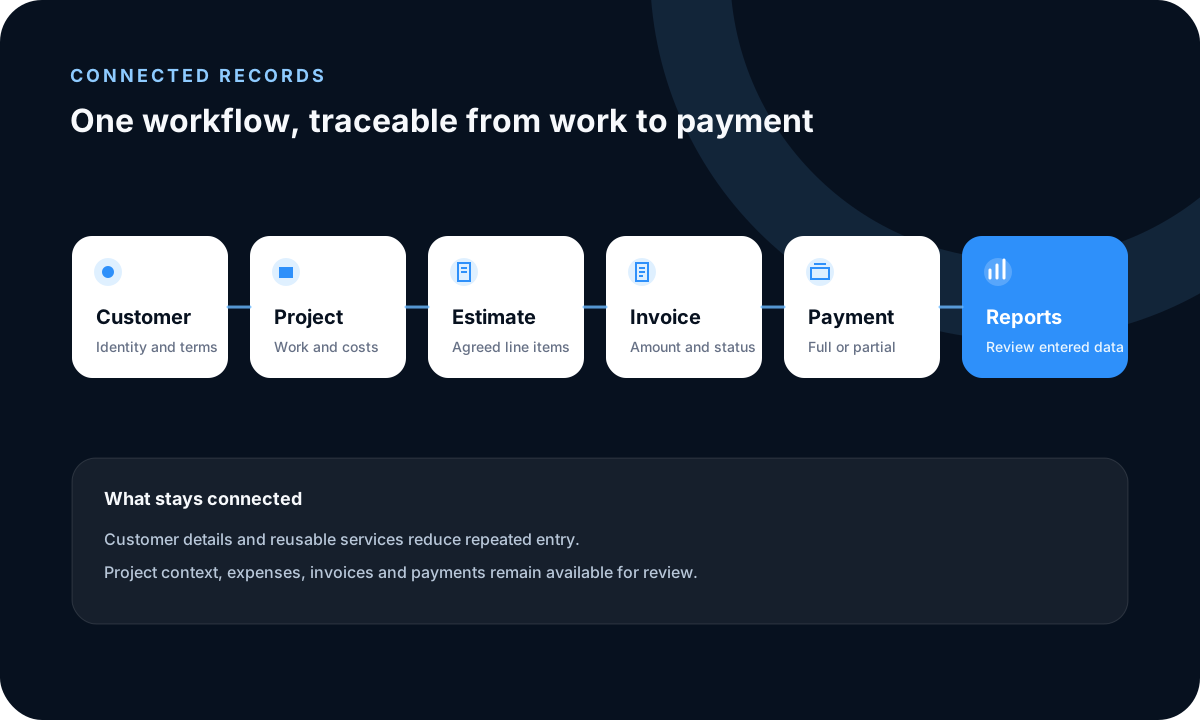
Good onboarding is not a welcome email. It is the short operating process that converts a commercial agreement into records a team can deliver, bill and review without guessing.
Before delivery starts, confirm who decides, what is included, how changes are approved, when billing happens and where the source records live.
Confirm the customer and decision path
Create one reliable customer record with the legal or trading name, billing details, working contacts and the person authorized to approve scope. Do not assume the person attending meetings can approve a change or an invoice.
Write down the communication channel for routine work, the escalation contact for blockers and the expected response time. This prevents an urgent delivery question from disappearing into an unowned inbox.
Translate the agreement into delivery records
Create the project from the agreed outcome, dates and constraints. Break the first phase into tasks with owners and visible dependencies, then link the estimate or other source of approved scope.
Record what is explicitly out of scope. A useful boundary is specific enough that a later request can be classified as included work, a trade-off or a change requiring approval.
- Named project owner and customer approver
- Deliverables and acceptance conditions
- Important dates and dependencies
- Out-of-scope work and change process
Set the billing workflow before the first invoice
Confirm currency, tax handling, purchase-order requirements, invoice recipient, payment terms and the event that permits invoicing. Keep these details with the customer and project rather than reconstructing them at billing time.
If the work uses deposits, milestones or recurring invoices, define how each payment relates to delivery. A schedule is only useful when both sides understand what triggers the next document.
Collect only the access the work needs
Request the minimum files, credentials and permissions required for the first phase. Prefer customer-managed invitations and role-based access over shared passwords or copied secrets.
Give every missing dependency an owner and due date. If work cannot start safely without it, show that constraint in the project rather than absorbing the delay silently.
Schedule the first operating review
Agree on an early checkpoint to compare delivery, decisions, costs and scope against the initial plan. The first review should happen soon enough to correct assumptions before they become expensive.
End onboarding by sending a concise record of what was confirmed, what remains open and what happens next. The goal is shared operating context, not paperwork for its own sake.
Keep this checklist
- Customer and billing identities are verified
- Scope and exclusions are linked to the project
- Decision makers and escalation contacts are named
- Billing triggers and payment terms are explicit
- The first review date is scheduled
Why FollowIncome publishes this
FollowIncome publishes practical operating guidance for solo founders and small teams. This article is grounded in traceable records, explicit assumptions and the documented product workflows linked below.
This article provides general operational information, not accounting, tax, legal or financial advice.