How to track business expenses consistently
Capture the source, amount, date, category and business purpose promptly, then review exceptions before reporting.
Capture the source
Record the transaction while the receipt or invoice is available. Include the date, amount, currency, supplier or note and business purpose, and retain only supporting information you are authorized to store.
Use stable categories
Apply categories consistently and avoid near-duplicate labels that split the same expense type across reports. Accounting or tax treatment may require professional advice beyond the operational category.
Connect direct costs
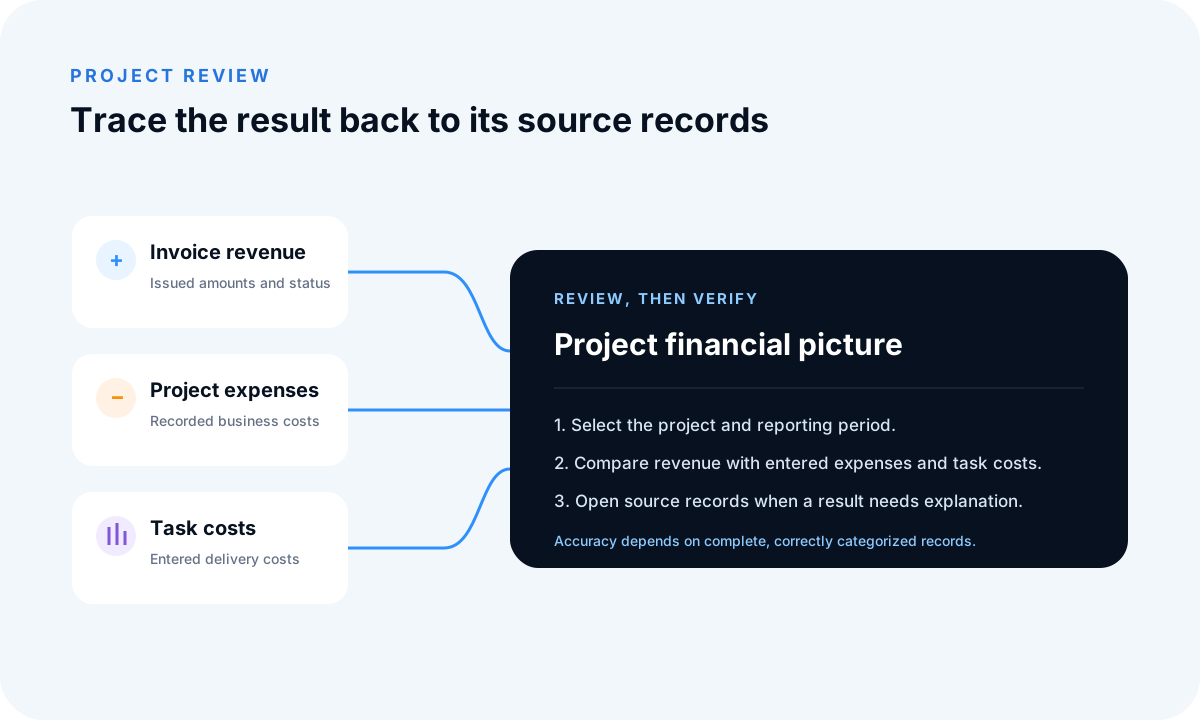
Link expenses to a project when the relationship explains delivery cost. Keep reimbursable expenses, ordinary costs and incoming client payments as separate records.
Review and reconcile exceptions
Look for missing evidence, unusual amounts, uncategorized records, duplicates and dates outside the expected period. Compare entered records with the relevant bank, card or provider source.
Frequently asked questions
What information should an expense record contain?
Useful fields include date, amount, currency, category, business purpose, project context and permitted supporting evidence.
Should every expense be linked to a project?
No. Link direct project costs when useful and keep general company overhead separate when it does not belong to one project.
Read practical guides, explore all features or create a free account.