Founder operations
A weekly business review that keeps a solo founder in control
A calm, repeatable 45-minute review for connecting delivery, cash flow and the next important decision.
By FollowIncome · · 7 min read · Reviewed by FollowIncome editorial team
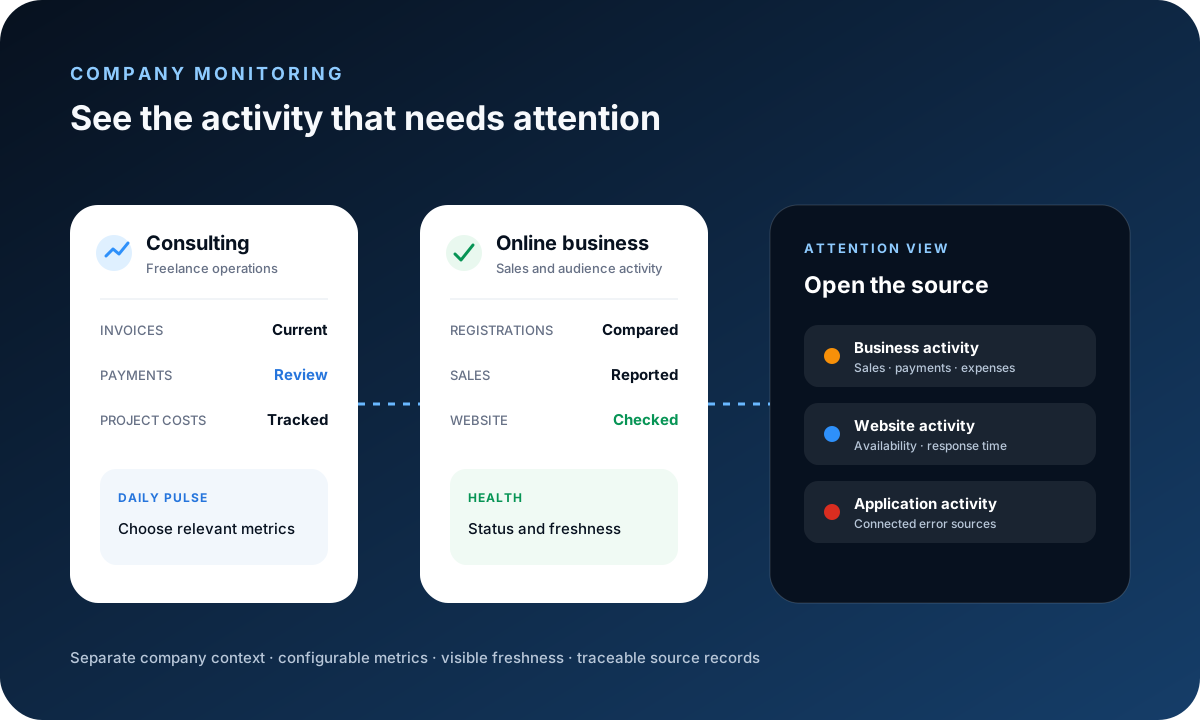
A founder does not need another dashboard ritual. They need a short review that changes what happens next. The useful version starts with evidence, separates signals from assumptions and ends with a small number of owned actions.
Review the business in the same order every week: delivery, billing, cash, costs, risk and next actions. Consistency makes changes easier to see and decisions easier to explain.
Start with the operating question
A weekly review should answer one question: what needs attention before another week passes? It is not a complete company audit and it should not become a tour of every metric.
Choose a fixed review period and one company workspace. Note data that is late, incomplete or drawn from an external provider so a tidy number is not mistaken for a confirmed fact.
Review delivery before revenue
Begin with active projects and the work promised to customers. Check overdue tasks, blocked decisions, approaching dates and scope that changed without a matching estimate or budget update.
This order matters. Billing and margin problems often begin as delivery problems: unclear scope, unrecorded costs, a delayed milestone or work that cannot yet be invoiced.
- Work due in the next fourteen days
- Tasks blocked by a customer or founder decision
- Scope changes that affect timing or price
- Projects with missing costs or status updates
Separate billing from cash
Next, review estimates awaiting a decision, invoices ready to issue, overdue invoices and payments recorded during the week. Keep invoice totals and payment totals separate: billing describes a claim for payment; a payment record describes cash received.
Open unusual or material records. Confirm the customer, project, date, currency, tax treatment, amount and status rather than relying only on a summarized total.
Look for cost and risk drift
Compare direct expenses and entered delivery costs with the projects that caused them. A profitable-looking project can change quickly when contractor costs, owner time or a late purchase has not been recorded.
Then scan the risks that can interrupt work: an overdue receivable, a failed website check, a new application error, an expiring dependency or a customer decision with no owner.
Finish with three decisions
Convert the review into no more than three priority actions for the coming week. Give each action an owner, a due date and a link to the source record that explains it.
A review is working when the next one begins with evidence of what changed. If the same issue appears for several weeks, change the operating system—not the wording of the reminder.
Keep this checklist
- One company and review period are explicit
- Delivery status was checked before financial summaries
- Invoices and payments were reviewed separately
- Unexpected figures were traced to source records
- No more than three priority actions were created
Why FollowIncome publishes this
FollowIncome publishes practical operating guidance for solo founders and small teams. This article is grounded in traceable records, explicit assumptions and the documented product workflows linked below.
This article provides general operational information, not accounting, tax, legal or financial advice.