Billing operations
An estimate follow-up workflow that respects the client
Keep proposed work moving without turning every unanswered estimate into an awkward sales chase.
By FollowIncome · · 6 min read · Reviewed by FollowIncome editorial team
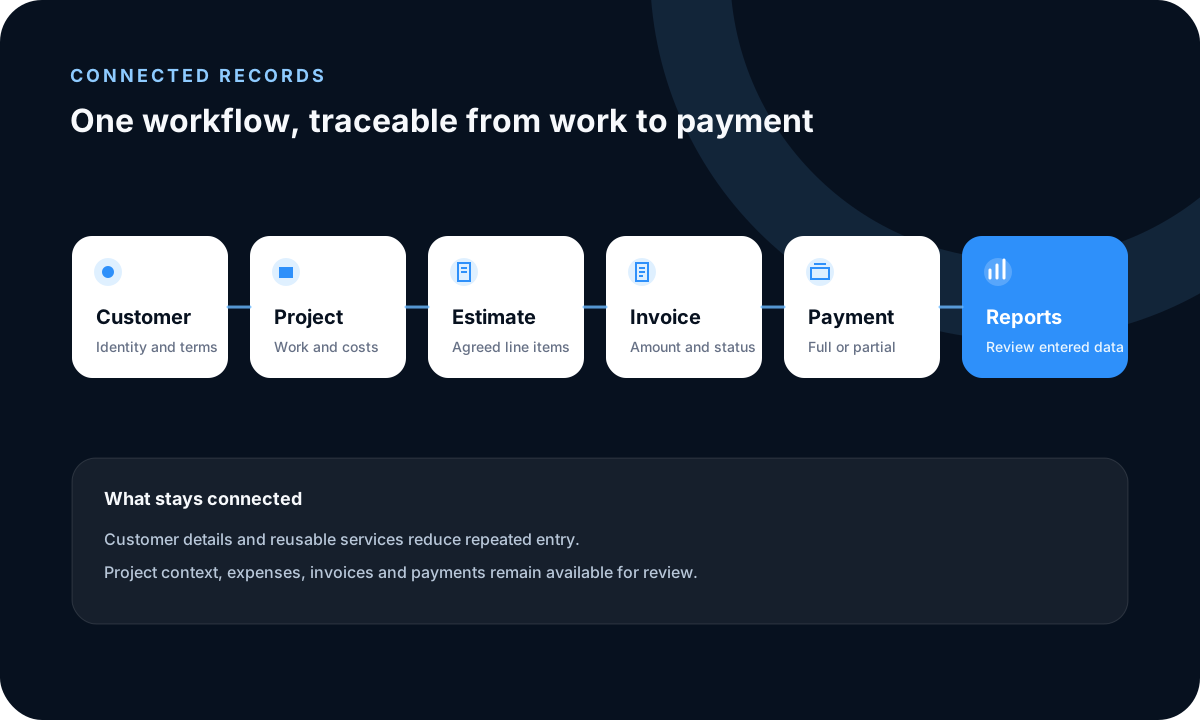
An unanswered estimate does not always mean rejection. The customer may need an internal approval, a revised start date or one missing detail. A useful follow-up process makes the decision easier without manufacturing urgency.
Send a complete estimate, schedule a small number of contextual follow-ups and close the loop when the proposal is no longer active.
Make the first document decision-ready
Confirm the customer, scope, deliverables, assumptions, price, currency, taxes, validity period and expected timing before sending. A follow-up cannot repair a proposal the customer cannot evaluate.
State what acceptance means and how changes will be handled. If a deposit, purchase order or signed agreement is required before work begins, make that condition visible.
Record the decision context
Note who requested the estimate, who approves it and any decision date the customer shared. Keep the source conversation with the customer or project record.
This context determines whether the next action should be a reminder, a clarification, a revised estimate or no contact at all.
Use a restrained follow-up sequence
Schedule the first check after the customer has had a reasonable review period. Ask whether the document reached the right person and whether a specific point is blocking a decision.
A later follow-up can mention the validity date or scheduling constraint factually. Avoid false scarcity, repeated daily messages or language that assumes agreement.
- Confirm receipt and the right reviewer
- Answer one concrete question at a time
- Update scope or dates in the estimate itself
- Respect an explicit no or pause
Revise without erasing the history
When price, scope or timing changes, issue a revised record and preserve the earlier version. The accepted version should be identifiable when the project or invoice is created.
Do not quietly change material terms after a customer has reviewed them. A clean document trail protects both the relationship and the later billing workflow.
Close inactive proposals deliberately
If the validity period ends without approval, mark the estimate appropriately and record why when known. A closed proposal is more useful than an indefinitely open pipeline item.
Review patterns across lost or delayed estimates, but do not invent reasons the customer did not provide. Use evidence to improve qualification, scope clarity and response timing.
Keep this checklist
- The estimate is complete and decision-ready
- Approver and expected decision timing are recorded
- Follow-ups are dated and limited
- Material revisions preserve prior versions
- Inactive proposals are closed with factual context
Why FollowIncome publishes this
FollowIncome publishes practical operating guidance for solo founders and small teams. This article is grounded in traceable records, explicit assumptions and the documented product workflows linked below.
This article provides general operational information, not accounting, tax, legal or financial advice.