Cash flow
A monthly cash-flow review for a small service business
Connect opening cash, expected receipts, committed payments and uncertainty before making the next spending decision.
By FollowIncome · · 7 min read · Reviewed by FollowIncome editorial team
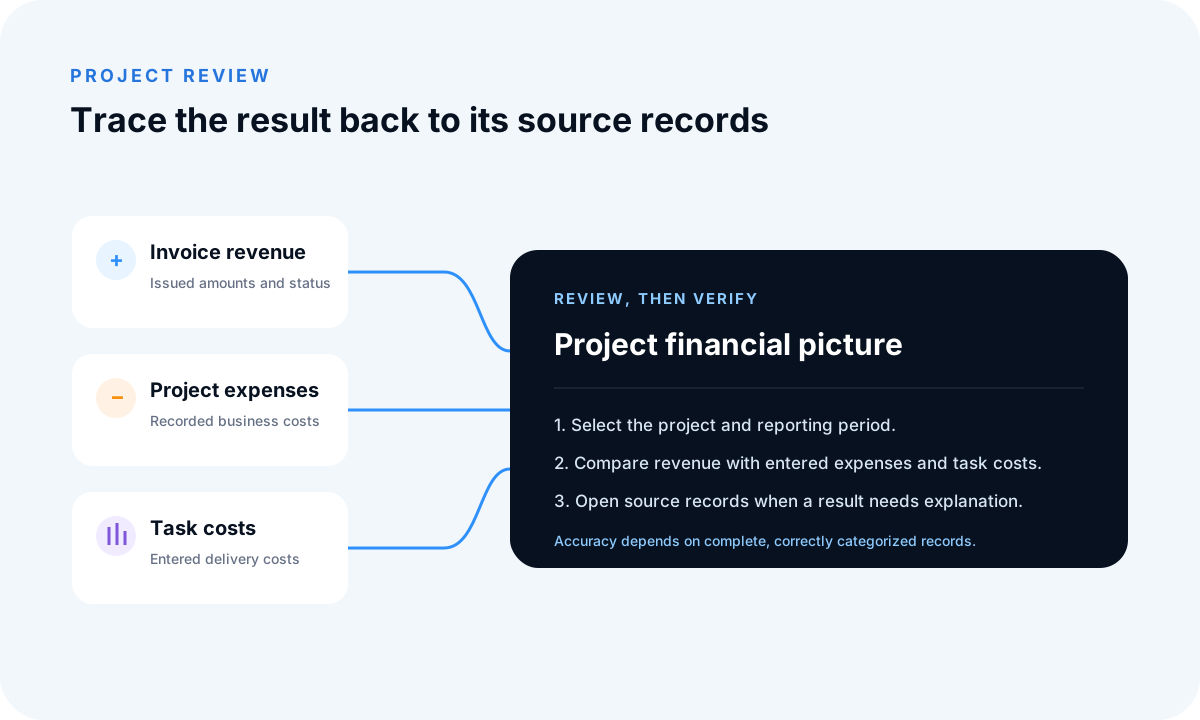
Cash-flow trouble often becomes visible before it becomes unavoidable. A monthly review gives a founder time to adjust collections, delivery commitments and discretionary spending while choices still exist.
Build the review from confirmed opening cash, dated expected receipts and dated commitments. Keep optimistic possibilities outside the base case.
Start with a confirmed opening position
Choose a review date and confirm the balances that are actually available to the business. Separate restricted money, tax reserves and amounts that belong to another company or owner.
Entered payment records can support the review, but they are not independent bank confirmation. Resolve material differences before treating the opening position as reliable.
Build expected receipts from open invoices
List outstanding invoices by customer, due date and remaining balance. Adjust for recorded partial payments, credits, disputes and known approval steps.
Use realistic expected dates based on evidence, not the date that produces a comfortable forecast. Keep unapproved estimates and speculative sales outside the base case.
List committed and likely payments
Add payroll, contractors, taxes, rent, software, debt payments and delivery purchases with their expected dates. Distinguish contractual commitments from optional or deferrable spending.
Include recurring costs that arrive automatically. Small subscriptions can become material when they are spread across several products or company workspaces.
- Taxes and statutory obligations
- Payroll and contractor commitments
- Project delivery purchases
- Recurring tools and infrastructure
Model a base case and a downside case
The base case should use the receipts and payments supported by current records. The downside case can delay uncertain receipts, add known risk costs or assume a key renewal does not happen.
Scenarios are not predictions. They reveal which assumption has the greatest effect and how much time the business has to respond.
Turn the review into dated actions
Create follow-up tasks for invoices, purchasing decisions and records that need confirmation. Give each one an owner, due date and link to the relevant source.
Review the previous forecast against what actually happened. Improving the quality of dates and assumptions is more valuable than adding decorative complexity.
Keep this checklist
- Opening cash is confirmed for a specific date
- Expected receipts trace to open invoices
- Committed payments include dates and owners
- Optimistic sales are outside the base case
- Actions were created for material gaps
Why FollowIncome publishes this
FollowIncome publishes practical operating guidance for solo founders and small teams. This article is grounded in traceable records, explicit assumptions and the documented product workflows linked below.
This article provides general operational information, not accounting, tax, legal or financial advice.