Project profitability
Track project costs before trusting a profitability report
A source-record workflow for finding the expenses and delivery costs that polished summaries often miss.
By FollowIncome · · 8 min read · Reviewed by FollowIncome editorial team
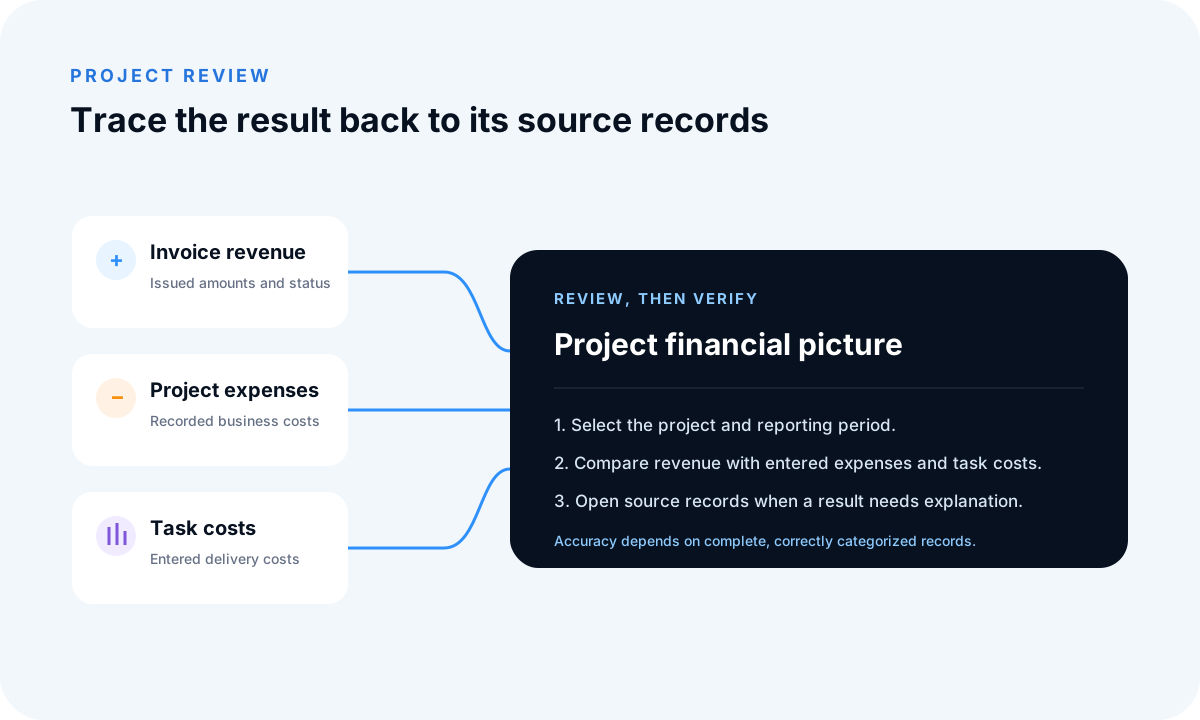
A profitability percentage is only as credible as the records underneath it. Missing contractor time, unassigned software costs or an unclear revenue basis can turn a precise-looking report into a misleading decision.
Define the period and revenue basis first, connect every material direct cost to the project, and label estimates separately from recorded actuals.
Define what the result is measuring
Choose the company, project, currency and review period. State whether revenue means invoiced work, recognized work under an accounting policy or cash received; these figures answer different questions.
Use one basis consistently within the comparison. If the report mixes billed revenue with cash expenses or spans different periods, write that limitation beside the result.
Capture direct expenses with evidence
Record purchases that exist because of the project: contractors, materials, travel, hosting or project-specific services. Preserve the date, amount, category, supplier and supporting document when available.
Link each expense to the project at entry time. A monthly total in a general category is harder to allocate fairly after the context has disappeared.
Include the cost of delivery work
Tasks and time can represent a meaningful delivery cost even when no supplier invoice exists. Choose an explicit cost rate or other method and apply it consistently to the work included in the period.
Do not silently treat founder time as free and then compare the margin with outsourced work. If owner time is excluded, say so; if it is estimated, label the assumption.
- Contractor or employee delivery costs
- Founder time when the chosen method includes it
- Project-specific tools and services
- Rework and support caused by the project
Separate shared overhead from direct cost
General software, rent and administration may support several projects. Decide whether the operational view excludes them, allocates them by a documented rule or reviews them only at company level.
Avoid inventing a complicated allocation that implies more accuracy than the inputs support. A simple, disclosed method is more useful than an opaque one.
Trace unusual margins back to records
When a margin changes, open the underlying invoices, expenses and tasks. Look for missing costs, duplicate entries, timing differences, scope changes and records assigned to the wrong project.
Treat the report as an operational prompt, not an audited conclusion. Formal accounting profit and tax treatment can require adjustments and qualified professional advice.
Keep this checklist
- Company, project and period are explicit
- Revenue basis is documented
- Material direct expenses have source evidence
- Delivery-cost assumptions are visible
- Unexpected results were traced to records
Why FollowIncome publishes this
FollowIncome publishes practical operating guidance for solo founders and small teams. This article is grounded in traceable records, explicit assumptions and the documented product workflows linked below.
This article provides general operational information, not accounting, tax, legal or financial advice.