Billing operations
How to create a professional business quote
Turn a defined scope and price into a clear quote or estimate that a client can review, compare, and approve.
By FollowIncome · · 8 min read · Reviewed by FollowIncome editorial team
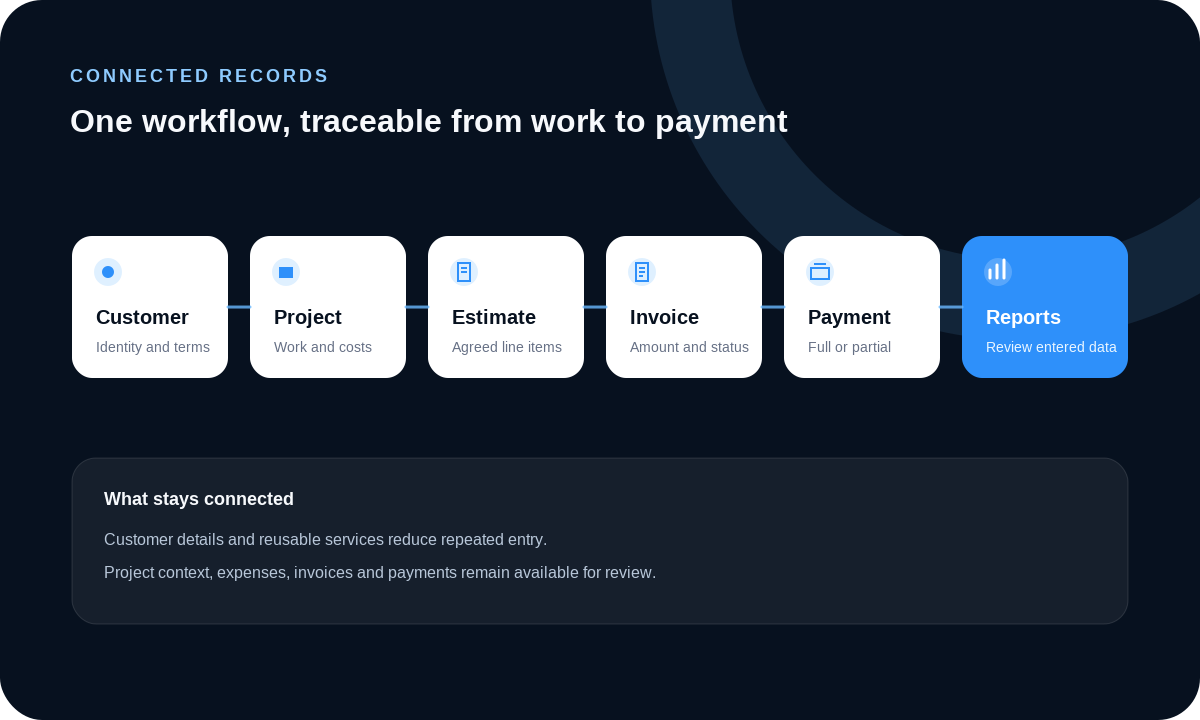
A professional quote makes the proposed work, price, assumptions, and next step easy to understand. It should help the client decide without forcing them to reconstruct the scope from emails or guess how tax, discounts, and validity affect the total.
Start with a confirmed scope, itemize the work, show the pricing calculation, set a validity date, state assumptions and terms, then review the document before sending it. Use an estimate when the amount may change and an invoice only when requesting payment.
Choose a quote or estimate
Use a quote when the scope is sufficiently defined and the business is offering a stated price. Use an estimate when the amount may change as quantities, site conditions, requirements, or other facts become clearer. The legal effect of either document depends on its wording, acceptance process, and applicable law.
An invoice serves a different purpose: it requests payment for an agreed obligation. Label the document accurately and avoid presenting an early approximation as a final payment request.
Add the essential business and client details
Identify the seller and the client clearly. Include the business name, useful contact details, the client or company name, a unique document number, issue date, validity date, and currency. Add registration or tax identifiers when they are required for your business and jurisdiction.
A validity date makes clear how long the proposed price and terms are intended to remain available. Choose a period that reflects expected cost changes, capacity, and the time the client reasonably needs to decide.
- Seller and client names and contact details
- Unique quote or estimate number
- Issue date and valid-until date
- Currency and applicable tax context
- A clear title identifying the document
Itemize the scope and price
Describe each service, product, phase, or deliverable in language the client recognizes. Use quantities and unit prices where they improve clarity. State important assumptions, exclusions, dependencies, and client responsibilities instead of hiding them behind one unexplained total.
The quote total equals the line-item subtotal minus the discount plus tax on the discounted subtotal when that calculation matches the intended agreement and local requirements. Confirm the tax rate, calculation order, rounding, and wording before delivery.
Work through a quote example
Assume a project contains discovery at 500 and implementation at 1,500, producing a subtotal of 2,000. A 5% discount is 100, leaving 1,900. If 20% tax applies to that discounted subtotal, tax is 380 and the quoted total is 2,280.
Show the subtotal, discount, tax, and final total separately so the client can trace the calculation. Keep the example currency and tax treatment consistent with the real document.
State terms and the next step
Use the notes or terms area for material information such as what is included, what is excluded, expected timing, payment structure, acceptance method, change handling, and any dependency that could affect price. Avoid copying generic terms that do not match the engagement.
Tell the client what to do next and preserve evidence of any acceptance or requested revision. A quote generator produces the document; it does not by itself create a complete contract, collect approval, or determine legal sufficiency.
Review, save, and follow up
Before sending, verify names, dates, numbering, line items, arithmetic, currency, tax, validity, scope, and terms. Save the final PDF or other delivered record and use an appropriate private channel when it contains client information.
If the client requests a change, update the quote deliberately and preserve the relevant history. After approval and the appropriate billable event, create and review the invoice rather than treating the quote itself as proof that payment is due.
Keep this checklist
- The document is correctly labeled as a quote or estimate
- Business and client details are accurate
- Number, dates, validity, and currency are clear
- Scope, quantities, and prices are itemized
- Discount, tax, and total were reviewed
- Assumptions, exclusions, and next steps are stated
- The final delivered record is saved appropriately
Frequently asked questions
What should a professional quote include?
Include seller and client details, a unique number, issue and validity dates, itemized scope, quantities, prices, currency, discount, tax, total, assumptions, terms, and a clear next step.
What is the difference between a quote and an estimate?
A quote generally offers a defined price for confirmed scope, while an estimate is an approximate amount that may change as the work becomes clearer. Their legal effect varies by wording and jurisdiction.
How long should a quote be valid?
Choose a period that reflects cost volatility, capacity, and the client’s decision process. Common practice varies, so state the exact valid-until date instead of relying on an unstated assumption.
Is a quote the same as an invoice?
No. A quote proposes scope and price before or during approval; an invoice requests payment for an agreed obligation. Review the final scope before creating the invoice.
Why FollowIncome publishes this
FollowIncome publishes practical operating guidance for solo founders and small teams. This article is grounded in traceable records, explicit assumptions and the documented product workflows linked below.
This article provides general operational information, not accounting, tax, legal or financial advice.